


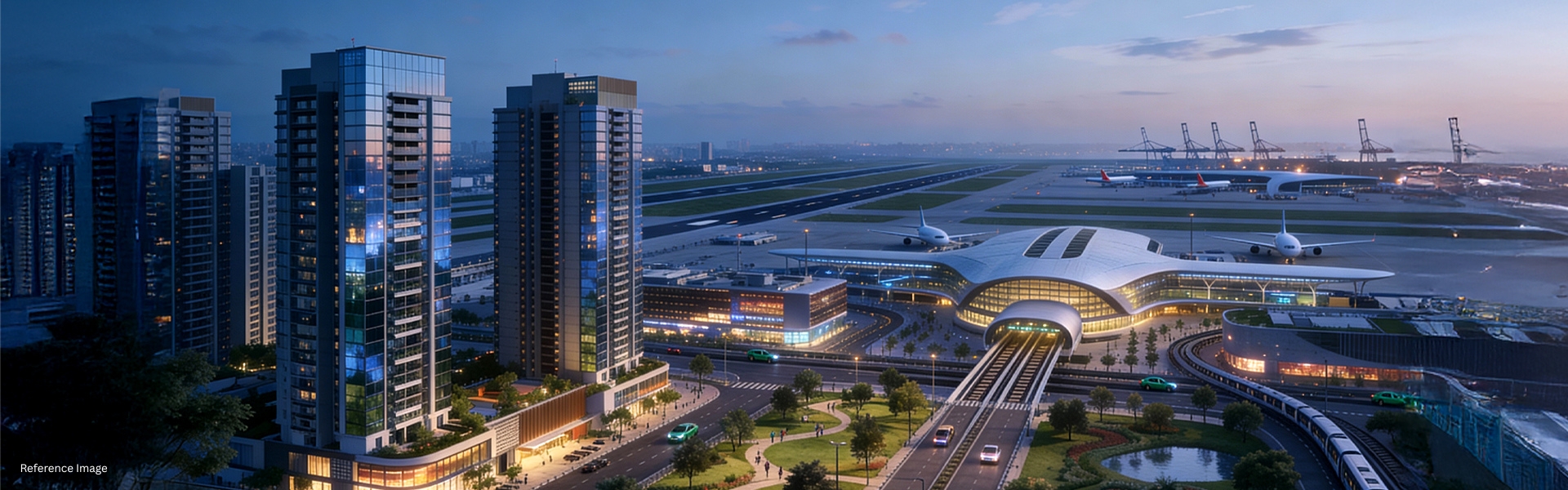
26 Dec The Airport Influence: Expected Property Shift in Juinagar by 2030
The landscape of Navi Mumbai real estate is undergoing one of its most transformative shifts in recent memory — and Juinagar, a historic yet increasingly strategic node, is right in the path of this change.
The upcoming Navi Mumbai International Airport (NMIA) — inaugurated in October 2025 and slated for phased expansion through the end of the decade — is not just another infrastructure project. Rather, it’s a catalyst that’s reshaping how people live, work, commute, and invest across the entire Navi Mumbai region. While much of the early attention has focused on areas like Ulwe, Panvel, and Kharghar, the ripple effects for locations like Juinagar are gaining serious traction.
Let’s unpack what this means for property dynamics in Juinagar by 2030 — from price expectations and connectivity upgrades to lifestyle appeal and investor interest.
Why the Airport Matters for Real Estate
Airports have long been powerful economic engines. They don’t just handle flights — they generate jobs, spur business development, enhance connectivity, and usher in global attention to surrounding locales.
In Navi Mumbai, the influence of NMIA is already evident:
- Property prices in airport-linked micro-markets such as Ulwe and Panvel have surged significantly even before the airport became fully operational. Residential prices in these zones spiked between 20% and 74% in recent years as investors anticipated growth. Financial Express
- Land rates within the official Navi Mumbai Airport Influence Notified Area (NAINA) range widely — signalling high speculative demand but also broad potential for appreciation once projects complete and connectivity improves. geosquare
- Commercial and mixed-use development — including a planned Aerocity with offices, hospitals, schools, and hospitality zones — is part of a strategic vision to turn this region into a diversified economic hub. India Today
This kind of ecosystem shift doesn’t happen overnight. But as we approach 2030, more measurable property shifts are expected in surrounding nodes — including Juinagar.
Where Juinagar Fits in the Navi Mumbai Real Estate Map
Juinagar is strategically positioned along the Belapur–Uran railway corridor — connecting it directly with Ulwe, Nerul, CBD Belapur, and beyond. This makes it a natural beneficiary of several infrastructure upgrades tied to airport growth:
Improved Connectivity
With multiple rail, road, and public transport upgrades in the pipeline — including new suburban services and stations near the airport corridor — travel times between Juinagar and major commercial or residential hubs are set to improve significantly. The Times of India
Faster commutes not only enhance livability but also make areas like Juinagar more attractive for professionals working near the airport or in emerging business districts.
Spillover Demand
As ultra-proximate areas (like Ulwe) experience sharp price increases, buyers and investors are expected to explore neighbouring nodes for value alternatives. Juinagar, with its established community and rising infrastructure profile, is in a strong position to capture this spillover demand.
Established Neighborhood with New Pull
Unlike some greenfield nodes, Juinagar already boasts robust social infrastructure — schools, markets, healthcare, and suburban train access — which reduces the usual growing-pains new areas face. As airport-driven employment and commercial activity expand, the demand for ready-to-move-in neighbourhoods with proven connectivity is likely to rise.
Expected Property Trends in Juinagar by 2030
While precise figures will vary by project and market conditions, general directional trends point toward meaningful appreciation and evolving demographics in Juinagar:
1. Property Price Appreciation
- Short-term: Already, real estate in Navi Mumbai’s airport belt has seen prices rising in anticipation of NMIA’s operations. Financial Express
- Mid-term (2026–2028): As commercial nodes activate and occupiers relocate, demand for housing within commuting distance is likely to intensify. Juinagar’s proximity to rail networks positions it as a commuter node for airport employees, service workers, and executives alike.
- Long-term (by 2030+): With improved transit links and enhanced livability, price growth in Juinagar could outpace older established nodes in outer Navi Mumbai — especially as buyers seek balanced affordability with connectivity.
Many analysts anticipate double-digit price growth in airport influence zones over multi-year horizons — and spillover markets like Juinagar often catch up once demand peaks closer to the airport core. LinkedIn
2. Rental Demand Growth
As businesses open, airline staff, logistics personnel, and associated service workers will need housing. This is expected to drive up rental demand in accessible suburbs — a trend usually followed by stronger capital values.
3. Shift in Buyer Profiles
Traditionally, buyers in Juinagar were local end-users looking for established suburban living. By 2030, the profile may diversify to include:
- Young professionals seeking convenient commutes
- Investors targeting rental yield
- Airport-linked workforce families
- NRIs looking for long-term residential assets
This diversification often stabilises markets and creates sustained demand trends.
4. Infrastructure Boost = Lifestyle Growth
Beyond the airport itself, Navi Mumbai’s broader connectivity projects — metro corridors, highway expansions, and rail upgrades — are injecting new life into nodes like Juinagar. These improvements complement airport-linked demand, making the neighbourhood more attractive for both living and investment.
Investment Outlook: Opportunity vs. Caution
Airports bring opportunity — but also nuance.
Why Juinagar Is Poised for Growth
- Connectivity: Surrounded by emerging transit upgrades.
- Spillover Potential: As ultra-proximate nodes saturate.
- Social Infrastructure: Schools, markets, healthcare already in place.
- Affordability Band: Compared to premium airport-core nodes.
What to Watch
- Over-speculation: Some areas already priced in airport hype; prudent buyers look at fundamentals.
- Infrastructure Timelines: Delays can temper near-term appreciation.
- Affordability Pressure: As prices rise, the middle segment may feel squeezed — both in buying and renting. geosquare
For long-term investors with a 5+ year horizon, Juinagar — backed by structural shifts and strategic location — offers a compelling balance of growth and livability.
Conclusion
By 2030, Juinagar is poised to evolve from an established commuter node into a vibrant real estate micro-market — one shaped as much by airport-led development as by broader urbanisation trends.
The Navi Mumbai International Airport serves as both the catalyst and compass for this shift. But rather than a sudden spike, what we’re likely to see by 2030 is a sustained, multifaceted transformation — where connectivity, community appeal, and economic opportunity converge to redefine how Juinagar is both lived in and invested in.
Frequently Asked Questions (FAQs)
1. How will the Navi Mumbai airport influence real estate around Juinagar?
The airport is expected to boost property demand and prices in surrounding nodes due to improved connectivity, job creation, and commercial activity. Nodes linked by rail and road networks — like Juinagar — may see increased interest from homebuyers and investors.
2. Are property prices already rising because of the airport?
Yes. Areas closer to the airport have experienced significant price growth in recent years as investors anticipated the airport’s impact. Spillover demand is gradually pushing prices in nearby suburbs too. Financial Express
3. Will Juinagar become expensive by 2030?
Property prices in Juinagar are likely to rise by 2030, though perhaps not as sharply as ultra-proximate airport nodes. However, improved connectivity and broader demand may significantly uplift prices compared with pre-airport levels.
4. Is Juinagar a good investment for rental income?
With growing employment and housing demand tied to airport operations and allied businesses, rental demand around well-connected suburbs like Juinagar is expected to strengthen — offering potential for rental income growth.
5. What should buyers consider before investing?
Look at project quality, connectivity to major transit (rail and road), and long-term infrastructure plans. Avoid speculative pricing without fundamentals — especially if timelines for new amenities are uncertain.