


27 Feb Complete Neighbourhood Guide: Sion, Mumbai Overview
Complete Neighbourhood Guide: Sion, Mumbai Overview
Located in the heart of Mumbai’s central corridor, Sion is one of the city’s most strategically placed neighbourhoods, blending excellent transportation connectivity, robust social infrastructure, and rising real estate promise. Positioned where South Mumbai meets the suburbs, Sion has matured from a transit junction into a fully-fledged urban residential and investment destination. Drawing commuters, families, and investors alike, the locality is defined by its accessibility and convenience.
Where is Sion & Why It Matters
Sion lies in central Mumbai, bounded by Kurla to the east and Dadar to the west, making it a pivotal point between the city’s southern business districts and thriving suburban hubs. Being centrally located means that Sion serves as a gateway to both premium western destinations and growing eastern belts.
Its geographical advantage is reflected in real commuting distances:
- Chhatrapati Shivaji Maharaj International Airport:~11–15 km, depending on traffic, about a 30-45 minute drive from Sion.
- Bandra-Kurla Complex (BKC):Roughly 3–6 km, making it one of the closest central suburbs to Mumbai’s biggest corporate hub.
- Nariman Point / South Mumbai:~14–18 km — accessible via major arterial roads and flyovers.
This centrality significantly reduces commuter fatigue for professionals and makes Sion a perfect bridging point between classic city living and metropolitan suburbs.
Connectivity: The Backbone of the Neighbourhood
Sion’s connectivity is among its most celebrated traits, powered by an integrated mesh of rail, road, monorail, buses and upcoming metro corridors.
1. Rail Network Excellence
At the core is the Sion Railway Station, part of the Mumbai Suburban Railway’s Central Line, which connects commuters directly to South Mumbai, Kurla, Thane, and beyond with high frequency and reliability.
In addition to the main station, nearby hubs like Chuna Bhatti and Dadar stations enhance rail accessibility, while other key terminals, such as Lower Parel and CST, are within 7–12 km, making long commutes smoother.
2. Monorail Connectivity
Sion also benefits from Mumbai’s monorail network:
- Guru Tegh Bahadur Nagar Monorail Stationserves local internal commutes within this belt, linking Sion, Wadala and Chembur.
- Wadala Depot Monorail Stationfurther supports mobility along key east-west corridors.
Although the monorail’s ridership is modest compared to rail, it fills important last-mile links that many commuters rely on, especially in local intra-urban journeys.
3. Road Networks: Seamless All-City Access
Sion’s road infrastructure is particularly noteworthy:
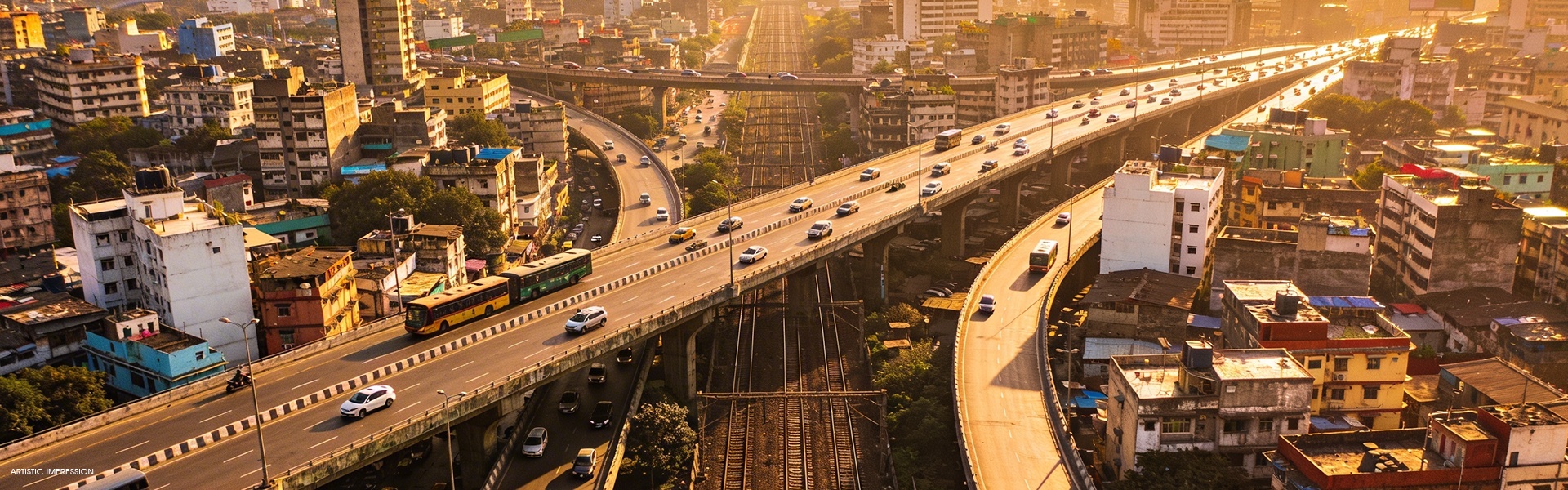
- Eastern Express Highwayand Eastern Freeway offer fast tracks to South Mumbai, bypassing inner-city congestion and cutting travel times significantly to Fort, Nariman Point, and Marine Drive.
- The BKC-Chunabhatti Flyoverhas improved access to the Bandra-Kurla Complex, avoiding notorious bottlenecks around Dharavi and Kurla.
- Sion-Panvel Highway (upcoming expansion) is expected to elevate connectivity by directly linking Sion to the Navi Mumbai International Airport and other eastern suburbs.
- Santacruz-Chembur Link Road (SCLR) and Lal Bahadur Shastri Marg (LBS Marg) further connect Sion to eastern and western suburbs with multi-directional access.
This robust network compresses travel times, a commuter to Bandra or Lower Parel might reach their destination comfortably in under 20 minutes outside peak hours, illustrating the real-world advantage of living here.
Ease of Commute: Quick Travel Across Mumbai
Here’s how Sion stacks up in terms of commute convenience:
- To BKC / Corporate Hubs:10–15 minutes by car, thanks to flyover links and east-west connectors.
- To South Mumbai (CST / Nariman Point):~30–40 minutes with improved freeway connectivity.
- To Western Suburbs (Bandra, Andheri):~15–25 minutes depending on traffic density and route choice.
This proximity makes Sion a commuter’s dream address, especially for professionals balancing work in multiple hubs or wanting quick links to business districts, downtown, and suburbs alike.
Social & Lifestyle Infrastructure
Connectivity isn’t just about movement. It’s also about access to essential services, and Sion delivers here too.
1. Healthcare and Education
Sion is home to well-known institutions such as Lokmanya Tilak Municipal General Hospital (Sion Hospital) and K.J. Somaiya Hospital, ensuring residents have immediate access to quality medical care.
The educational landscape includes stalwarts like Don Bosco High School, Somaiya Vidyavihar campus and other reputable schools and colleges, making it appealing to families and students.
2. Local Markets, Lifestyle & Culture
From everyday essentials to retail and dining experiences, Sion delivers. Traditional markets like Gandhi Market coexist with emerging malls and lifestyle hubs nearby. Resident reviews frequently highlight the convenience of local shops and eateries, along with a generally safe and vibrant community vibe.
Proximity to entertainment zones in Dadar, Bandra, and Lower Parel further enriches the lifestyle quotient, enabling weekend outings and social life without long travel.
Real Estate & Investment Landscape
Given its central location, strong infrastructure, and improving connectivity, Sion has seen consistent interest from both homebuyers and investors.
Builders are launching new residential projects that respond to both premium demand and long-term investment potential. Property prices are generally higher than many outer suburbs, reflecting the premium placed on locational convenience, yet they remain competitive compared to ultra-prime neighbourhoods like Lower Parel or Bandra.
The steady absorption of residential units, coupled with redevelopment initiatives like MHADA’s new housing projects, indicates ongoing urban renewal and demand.
Challenges & Considerations
No neighbourhood is without challenges. Sion does face traffic congestion during peak hours, especially around major intersections and arterial roads, a common feature in high-density Mumbai localities. Investing in infrastructure like flyovers and expanded roadways is an ongoing priority.
Some older pockets also grapple with periodic urban maintenance issues, but redevelopment and municipal focus on accessibility improvements continue to elevate standards of living.
Subtle Spotlight: Raheja Amaltis — A Reflection of Sion’s Promise
For those seeking premium living that maximizes Sion’s connectivity and lifestyle advantages, Raheja Amaltis emerges as a noteworthy residential choice. Located next to the BKC Connector and just moments from major transit routes like the Eastern Express Highway and Eastern Freeway, Raheja Amaltis places residents within effortless reach of BKC, South Mumbai and key social and employment hubs.
Its thoughtfully designed 3, 3.5 and 4 BHK homes deliver spacious living with panoramic city views, while contemporary amenities cater to a modern urban lifestyle. With planned completion by 2028 and a strategic address in Samarth Nagar, Sion, it stands as a residential statement of connectivity meeting luxury.
Conclusion
Sion’s evolution from a transit junction to a central urban neighbourhood reflects Mumbai’s changing dynamics. With its superior connectivity framework, strong social infrastructure, vibrant community life, and growing real estate momentum, Sion continues to draw attention from those seeking an accessible, dynamic, and well-connected address. Whether commuting for work, seeking convenience, or investing for the future, Sion’s central advantage, underscored by projects like Raheja Amaltis, makes it a compelling neighbourhood in Mumbai’s residential map.