


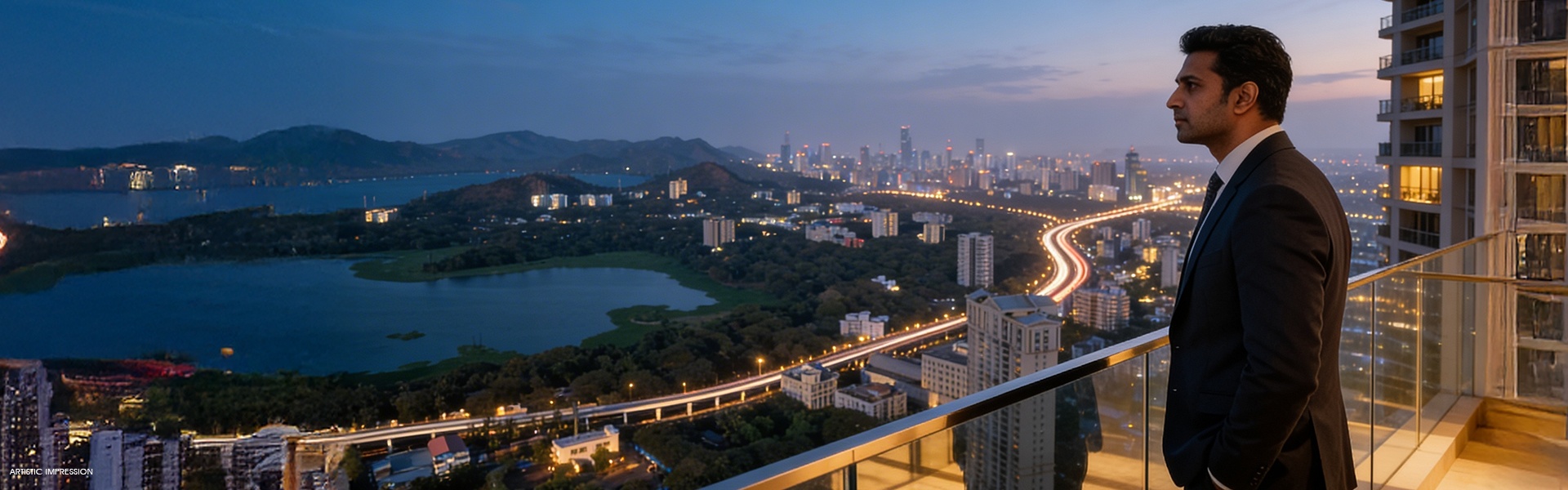
27 Feb Connectivity & Commute: Why Kanjurmarg is Well-Linked
Connectivity & Commute: Why Kanjurmarg is Well‑Linked
Nestled in the eastern belt of Mumbai’s Central Suburbs, Kanjurmarg isn’t just a place to live; it’s where connectivity defines lifestyle convenience and long‑term growth potential. Whether you’re commuting for work, accessing education hubs in Powai, or travelling to the airport, Kanjurmarg’s transport ecosystem keeps you well‑connected across the city and beyond.
This blog dives deep into why Kanjurmarg’s connectivity edge, present and future, makes it one of the most strategically located neighbourhoods in the city.
A Central Transit Nexus: Roads, Rails & Rapid Transit
Kanjurmarg’s connectivity strength lies in its multi‑modal transport network. It seamlessly integrates local rail, arterial roads, and future metro corridors, making it a true mobility hub in Mumbai.
1. Suburban Rail Lines: The Lifeline
The Kanjurmarg railway station is positioned on the Central Line of Mumbai Suburban Railway, which is the backbone of daily commutes across the city. This line connects passengers to South Mumbai, Dadar, Kurla, Thane and further with high frequency and reliability, crucial for daily office‑to‑home travel and for students who use trains to reach educational hubs.
Rail services are typically the most dependable way to traverse Mumbai’s sprawling geography, and Kanjurmarg’s spot on the Central Line makes it a commuter favourite.
2. Road Networks: East‑West & North‑South Integration
Kanjurmarg benefits from an extensive road network that connects it efficiently to Mumbai’s core and peripheries:
Jogeshwari–Vikhroli Link Road (JVLR)
This 10.6‑km corridor cuts across the city from Jogeshwari (West) to Vikhroli (East), linking the Western Express Highway (WEH) to the Eastern Express Highway (EEH). It enables faster east–west travel across Mumbai and provides Kanjurmarg with a direct road corridor connecting western workplaces and business districts.
Eastern Express Highway (EEH) & LBS Marg
Both EEH and Lal Bahadur Shastri Marg (LBS Marg) give Kanjurmarg unmatched north–south mobility, opening swift access to Thane, Ghatkopar, Kurla, and South Mumbai office hubs.
This blend of roads positions Kanjurmarg as a physical midpoint between major commercial zones ,a rare advantage in a city where commuting times make or break daily life.
Quick Commutes to Key Destinations
One of the biggest reasons professionals and residents choose Kanjurmarg is proximity to real, tangible travel times, not just promises.
Kanjurmarg ↔ Powai
Though geographically close, just about 4 km apart, the commute is very manageable. Driving from Kanjurmarg to Powai takes roughly 7 minutes under normal traffic conditions.
Powai’s vibrant business hubs, like Hiranandani Gardens, SEEPZ, L&T Business Park, and IIT Bombay educational precincts, are all within easy reach, making daily commutes for students and office‑goers practical and quick.
Rail + Last‑Mile Option:
Alternatively, many commuters take a short ride on the suburban train to Vikhroli station (10‑15 minutes) and then a cab/auto to Powai, a popular route for cost, convenience, and reliability.
Kanjurmarg → Mumbai Airport (CSMIA)
By road, the distance between Kanjurmarg and Chhatrapati Shivaji Maharaj International Airport is around 12‑14 km, typically a 12–14 minute drive by taxi or car under normal traffic.
This proximity, being just a quick hop to the airport is an under‑appreciated advantage for professionals who travel frequently or for frequent flyers who need reliable access without lengthy commutes.
How Upcoming Metro Infrastructure Will Change the Commute Game
Kanjurmarg isn’t just well‑linked today, it’s set to become one of Mumbai’s most future‑ready transit hubs.
Mumbai Metro Line 6 (Pink Line)
- Route: Swami Samarth Nagar (Lokhandwala) to Vikhroli (EEH)
- Stations:13, including Kanjurmarg West and connecting Powai and key transit points.
- Status:Under advanced construction.
- Completion Expectation:By late 2027 (Line 6 opening timeline per project plans).
Metro Line 6 will transform east–west travel, dramatically cutting down congestion along JVLR and connecting Kanjurmarg to Andheri, Western Express Highway, and SEEPZ, among others. It’s projected to boost transit speeds significantly, saving 30–45 minutes compared to current traffic‑bound journeys.
Mumbai Metro Line 4 (Green Line)
Metro Line 4 will run from Wadala to Kasarvadavali, intersecting the Eastern Express Highway and linking Kanjurmarg with major growth nodes including Bhandup and Mulund. Experts estimate this will nearly halve travel times for many commuters along the EEH‑LBS Marg corridor.
A dedicated pedestrian link is also being planned to connect Metro Line 4 directly with the Kanjurmarg railway station, enhancing interchange convenience.
Mumbai Metro Line 14 (Kanjurmarg – Badlapur)
This forthcoming line will stretch far into the MMR’s growth suburbs, connecting Kanjurmarg with eastern fringe towns like Badlapur. With 15–20 proposed stations along a 38–45 km route, this infrastructure project (likely operational by 2030) will weave Kanjurmarg into Mumbai’s broader commuter belt, unlocking new residential and commercial demand corridors.
Interchange Potential: A True Multi‑Modal Hub
Where most Mumbai suburbs rely on one or two modes of travel, Kanjurmarg is evolving into a multi‑modal junction where:
- Suburban trains (Central line)
- Multiple Metro lines (4, 6, 14)
- High‑capacity road arteries
- Pedestrian connectors and future infrastructure nodes
all intersect within walking or short transit distance.
This integration means residents will soon have the freedom to choose the fastest route, whether it’s the metro to the western suburbs, suburban trains to South Mumbai, or expressway access to Thane.
Real Impact: Faster Commutes + Better Quality of Life
With multi‑modal connectivity expanding, Kanjurmarg commuters will enjoy:
Shorter Daily Commutes
Metro and express road enhancements mean less time stuck in traffic, whether heading to Andheri, BKC, Powai, or Bandra.
Reduced Dependence on Cars
Greater access to rapid transit encourages a shift away from personal vehicles, cutting fuel costs and stress on daily travel.
Future Value Uplift
Proven patterns across global cities show that neighbourhoods with strong connectivity tend to outperform in real estate value growth, higher rental demand and stable long‑term yields.
Kanjurmarg’s centrality in transit planning means it isn’t just connected today, it’s a future growth engine for Mumbai’s urban fabric.
Conclusion: Kanjurmarg’s Connectivity Advantage
In a city where commute times often define lifestyle choices, Kanjurmarg’s multi‑layered connectivity makes it exceptionally well‑positioned. It sits at a strategic nexus of road networks, suburban rail, and soon multiple metro corridors, placing destinations like Powai and the International Airport within comfortable reach.
With planned transit expansions like Metro Lines 4, 6, and 14, Kanjurmarg is not just well‑linked, it’s poised to become one of Mumbai’s most mobility‑driven residential and commercial hubs.
FAQs, Kanjurmarg Connectivity & Commute
1. How far is Kanjurmarg from Powai?
Kanjurmarg and Powai are roughly 3–4 km apart, with a quick 7‑minute drive under normal traffic conditions.
2. What’s the typical travel time from Kanjurmarg to Mumbai Airport?
By road, a taxi from Kanjurmarg to Chhatrapati Shivaji Maharaj International Airport takes around 12–14 minutes.
3. How will Metro Line 6 change commuting?
Metro Line 6 will connect Kanjurmarg to key corridors like Andheri, SEEPZ and JVLR, cutting travel times by 30–45 minutes vs. road travel today.
4. What future metro connections will Kanjurmarg have?
Kanjurmarg will be served by Metro Lines 4, 6, and 14, offering expanded connectivity across Mumbai, Thane and extended suburbs.
5. What makes Kanjurmarg a transit hub?
Its integration of local rail, arterial roads, planned metro networks, and pedestrian infrastructure creates a unique multi‑modal transit ecosystem, uncommon for most suburbs.