


28 Feb Living in Sion: How Central Connectivity Changes Everyday Commute
Living in Sion: How Central Connectivity Changes Everyday Commute
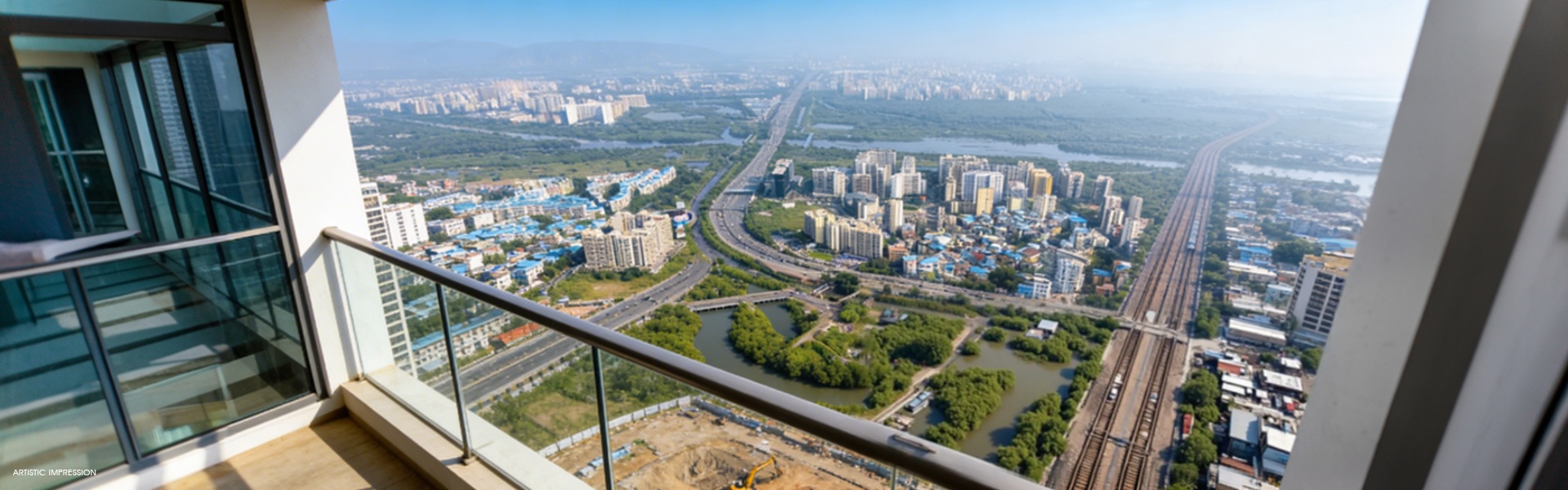
When it comes to urban living in Mumbai, few neighbourhoods offer as strategic a location as Sion. Nestled along the city’s Central Line, Sion stands as a bridge between South Mumbai, the western suburbs, and Navi Mumbai, making it one of the most pivotal commuting hubs in the metropolitan region. With daily travel patterns evolving and congestion increasing across the city, Sion’s central connectivity is becoming more than a convenience; it’s a lifeline that fundamentally reshapes how residents move, work, and live.
What sets Sion apart today isn’t just its location. It’s the transformative infrastructure projectsunderway or nearing completion that are set to slash commute times, relieve gridlock, and create new patterns of mobility for millions of commuters.
Why Sion’s Connectivity Matters
In a city where distance doesn’t always translate to time, Sion’s position along key road and rail corridors already gives residents an edge. The Sion Railway Station on the Central Line provides direct access to South Mumbai, Dadar, Kurla, Thane and beyond. But recent developments and upcoming projects, both rail and road, are about to turn this advantage into an exponential leap forward.
Central Location + Multiple Transport Layers
Sion benefits from:
- Suburban Rail access on the Central Line, direct to major hubs
- Proximity to the Eastern Freeway, accelerating trips to South Mumbai
- Road links via the Santacruz–Chembur Link Road (SCLR) that tie into the Western Express Highway and Eastern Express Highway
- A network of public transport interfaces, soon including major metro corridors
This multi-modal matrix underscores how connectivity is central to everyday life in Sion — reducing stress, saving time, and opening the city to more opportunities.
Infrastructure Projects Transforming Daily Commutes
Infrastructure Projects Transforming Daily Commutes
Metro Line 2B, also part of the Yellow Line (DN Nagar to Mandale), is poised to be one of the most consequential projects reshaping Mumbai’s transport landscape.
Once fully operational, Line 2B will span approximately 23.6 km with 20 stations, linking western suburbs like Andheri and Bandra with eastern hubs such as Kurla, Chembur, and Mandale. This corridor directly connects to Sion’s urban catchment area and provides a long-awaited east–west rapid transit alternative to congested roads.
Impact on travel times:
- Line 2B is designed to reduce current commute times between western and eastern suburbs by an estimated 50–75 % compared to existing road travel, depending on traffic conditions.
- Partial stretches like the Mandale–Chembur segment are expected to begin operations around April 2026, meaning commuters may see benefits soon.
- Full service is anticipated by 2026–2027, dramatically increasing convenience for daily riders.
This will not only cut time for cross-city travel but also relieve pressure on suburban rail and arterial roads — offering a game-changing upgrade to Mumbai’s overall transport grid.
2. WEH-BKC Connector: Faster Access to the Financial Hub
Another major boost on the horizon is the Western Express Highway-Bandra Kurla Complex (WEH-BKC) connector, a critical link currently in its final construction phase. The elevated 1.4 km corridor under the Santacruz–Chembur Link Road (SCLR) extension will directly connect the Western Express Highway with Bandra Kurla Complex (BKC), one of India’s busiest commercial and employment hubs.
Expected benefits of the connector:
- Up to a 35-minute reduction in peak-hour travel times between key employment centres and arterial highways.
- Relief for critical bottlenecks at Vakola, Kalina, Kurla and surrounding junctions by providing a signal-free route for vehicles.
- A more predictable commute for office workers, logistics, and airport-bound travellers, all significant to Sion residents due to its central road access.
The WEH-BKC connector is expected to open by March–April 2026, a timeline that makes it one of the most impactful short-term improvements for commuters across Mumbai.
3. Twin Underground Road Tunnel Between Thane and Borivali
Although not directly passing through Sion, the Thane-Borivali twin tunnel project reflects how broader connectivity projects are reshaping travel patterns across the Mumbai Metropolitan Region (MMR). This major road infrastructure initiative will dramatically reduce travel time along the northern corridor by linking Thane and Borivali in about 15 minutes, compared to the typical 60–90 minutes on existing roads.
Key notes:
- The 11.8 km twin tunnel will cut the effective distance between Borivali and Thane, shortening journeys and relieving massive congestion on major east-west and north-south corridors.
- Expected completion by roughly 2028–2029 after accelerated construction planning, with potential environmental safeguards under Sanjay Gandhi National Park.
This project confirms how Mumbai is developing infrastructure beyond surface travel, enabling greater inter-suburban mobility and influencing lifestyle patterns even in centrally located neighbourhoods like Sion.
4. Versova–Bandra Sea Link and Coastal Network Enhancements
The Versova–Bandra Sea Link (VBSL) is another transformative project feeding into Mumbai’s north-south transport dynamics. Officially named the Swatantrya Veer Savarkar Sea Link, this structure is expected to reduce travel times between Versova and Bandra from around 45–60 minutes down to 10–15 minutes once operational.
Although located along the western coast, the VBSL is part of a larger coastal expressway framework that will relieve pressure on the Western Express Highway, indirectly benefiting cross-city traffic flows, including those that impact central corridors closer to Sion.
Combined with the ongoing Coastal Road project, these sea link extensions represent Mumbai’s move toward multi-axis connectivity that reduces travel times across suburban and central districts.
Real Effects on Daily Commutes for Sion Residents
With these developments, Sion residents stand to gain significantly in terms of commute efficiency and quality of life.
Drastic Reductions in Travel Time
- East-west travel across the city, historically one of Mumbai’s toughest challenges — will become smoother thanks to Metro Line 2B, with potential travel time reductions of up to 75 % versus road alternatives.
- Access to the BKC financial district will be faster and less stressful with the WEH-BKC connector, particularly during peak hours, shaving off ~35 minutes for many commuters.
This means residents in and around Sion could see commutes that once took over an hour drop to manageable half-hour journeys, a profound improvement in a city where time on the road often equals time lost from family, leisure or productivity.
Shift in Lifestyle, Work and Urban Integration
Connectivity changes aren’t just about minutes saved. They redefine lifestyles and opportunities:
- Greater job accessibility across multiple commercial hubs
- Improved attractiveness for rentals and residences due to fast travel options
- Enhanced potential for economic activities in and around central areas like Sion
- Better alignment between housing locations and workplace choices across the MMR
These infrastructure interventions collectively enable a more integrated Mumbai, where Sion becomes a confluence point rather than a bottleneck in daily travel journeys.
Conclusion
Sion’s central connectivity is undergoing a dramatic transformation. With Metro Line 2B, the WEH-BKC connector, major road tunnels and coastal expressways, the everyday commute for residents is poised to become significantly faster, more predictable, and far less stressful.
For those choosing to live here, whether for work, family, or investment, the future holds a networked Mumbai where travel times shrink, accessibility grows, and the city feels more connected than ever before.