


27 Feb Why NRIs Prefer Well-Connected, Low-Density Residential Areas
Why NRIs Prefer Well-Connected, Low-Density Residential Areas
For Non-Resident Indians, buying a home in India is rarely an impulsive decision. It is layered with emotion, practicality, and foresight. Whether the intent is future relocation, securing a family base, or building a long-term investment, NRIs tend to evaluate real estate through a global lens. And one clear preference consistently emerges: well-connected, low-density residential areas.
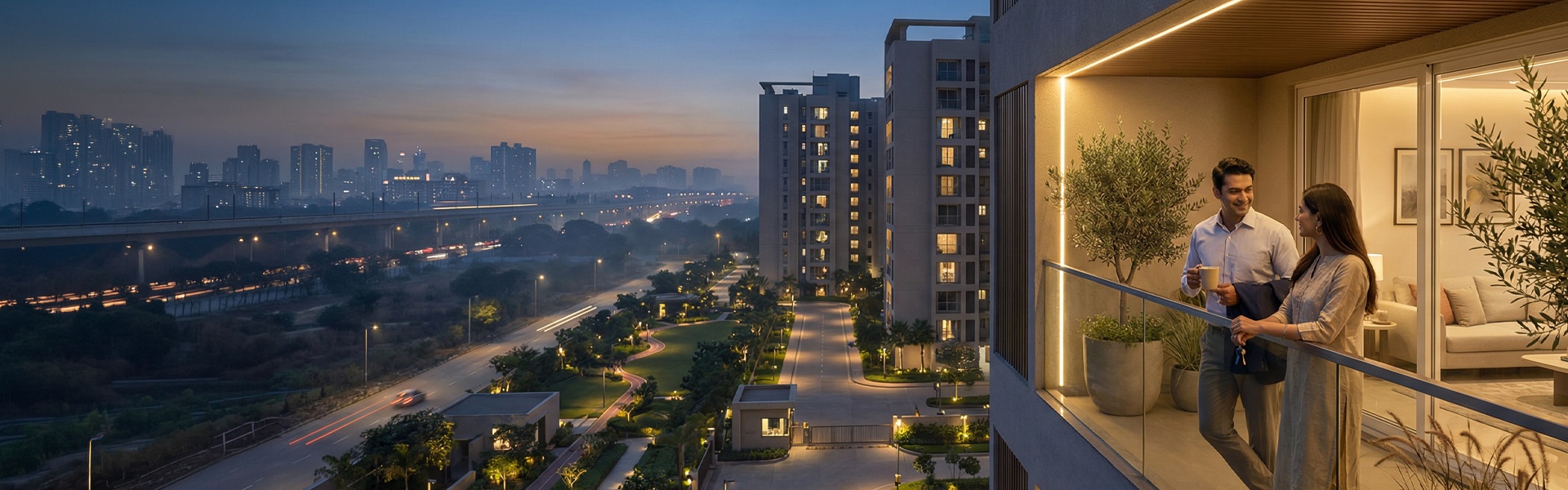
As Indian cities grow vertically and horizontally, NRIs are increasingly selective about where they invest. Congestion-heavy neighbourhoods, overbuilt zones, and poorly planned localities no longer fit into the way global Indians envision homeownership. Instead, they seek places that combine seamless connectivity with breathing space, areas that promise calm living today and value growth tomorrow.
The NRI Perspective on “Home”
For many NRIs, a home in India is not just real estate. It represents roots, continuity, and a sense of belonging. At the same time, it must meet global standards of comfort, safety, and predictability.
Living abroad exposes NRIs to cities where commuting is efficient, zoning is deliberate, and residential density is controlled. Naturally, these expectations shape their preferences back home. They look for neighbourhoods that feel organised rather than chaotic, accessible rather than isolated, and future-ready rather than reactive.
This is where the combination of strong connectivity and low-density planning becomes crucial.
Connectivity as a Non-Negotiable
For NRIs, connectivity is not a luxury, it is a baseline requirement.
Many NRIs travel frequently between countries. Easy access to airports, expressways, and business districts plays a significant role in their decision-making. A well-connected location reduces friction, whether it is for personal travel, visiting family, or managing property remotely.
Beyond airports, connectivity to employment hubs, commercial centres, hospitals, and social infrastructure is equally important. NRIs understand that good connectivity is what keeps a neighbourhood relevant over decades, not just years.
Well-connected areas tend to adapt better to urban expansion. Infrastructure investments such as metro corridors, arterial roads, and intercity connectors usually strengthen these locations further, protecting long-term value and usability.
Why Low-Density Living Matters More Than Ever
Low-density residential areas are increasingly rare in Indian metros, and that scarcity is exactly why NRIs value them.
Lower density translates into wider roads, more open spaces, better light and ventilation, and reduced strain on civic infrastructure. For NRIs accustomed to planned urban environments, overcrowded neighbourhoods often feel overwhelming and unsustainable.
Low-density planning also improves quality of life in subtle but meaningful ways. There is less noise pollution, easier access to amenities, better security management, and a stronger sense of community. These factors may not always reflect immediately in price, but they significantly influence long-term livability.
From an investment standpoint, low-density areas often age better. They are less prone to rapid deterioration, redevelopment chaos, and civic overload, all of which can erode property value over time.
The Balance NRIs Look For
What NRIs actively seek is balance.
They do not want remote, disconnected townships that feel isolated from the city. At the same time, they avoid hyper-dense urban cores where congestion is constant and lifestyle compromises are inevitable.
Well-connected, low-density neighbourhoods sit in this sweet spot. They offer accessibility without exhaustion, development without disorder, and growth without overcrowding.
Such areas often lie slightly outside traditional city centres, positioned along major growth corridors. Over time, as cities expand outward, these neighbourhoods transition from peripheral to prime, delivering both lifestyle comfort and appreciation.
Long-Term ROI and Capital Protection
NRIs typically invest with a longer horizon than domestic buyers. Instead of chasing short-term price spikes, they focus on capital protection and steady appreciation.
Well-connected, low-density areas align perfectly with this approach. Strong connectivity ensures sustained demand, while controlled density limits supply pressure. This combination supports healthier price growth and rental stability.
Additionally, tenants, especially professionals and families, increasingly prefer less congested neighbourhoods with good access to work hubs. This strengthens rental yields and reduces vacancy risks, which is particularly important for NRIs managing properties from abroad.
In volatile markets, such locations also tend to be more resilient. Even during slowdowns, end-user demand in well-planned areas remains relatively stable.
Lifestyle Assurance for Families
Many NRI purchases are driven by family considerations. Parents, children, or extended relatives often occupy these homes, either immediately or in the future.
Low-density neighbourhoods are generally safer, quieter, and more conducive to family living. Access to schools, healthcare facilities, parks, and daily conveniences within a manageable radius adds to peace of mind.
Connectivity further ensures that residents are not cut off from the city’s opportunities. Whether it is education, medical emergencies, or social engagement, well-linked locations provide reassurance that essential services are always within reach.
For NRIs planning eventual repatriation, these neighbourhoods also offer a smoother transition back into Indian city life, without the shock of extreme congestion or compromised infrastructure.
Easier Property Management and Governance
Another often overlooked factor is ease of property management.
Low-density developments usually have better maintenance standards, more efficient facility management, and clearer governance structures. This is especially important for NRIs who cannot be physically present to resolve issues.
Well-connected areas also attract reputed developers, professional property managers, and organised communities. This reduces the risk of mismanagement and ensures better upkeep over time.
From documentation to resale, properties in such neighbourhoods are typically easier to manage, lease, and exit when needed.
Urban Planning and Future Readiness
Cities evolve, but not all neighbourhoods evolve equally.
NRIs pay close attention to urban planning signals. Upcoming infrastructure, zoning policies, and civic investment patterns help them identify locations that will remain relevant over the next 20 to 30 years.
Well-connected, low-density areas often benefit the most from planned growth. Infrastructure additions enhance accessibility without drastically altering the residential character. This balance allows neighbourhoods to modernise without losing their core appeal.
Such areas are also better positioned to adopt future mobility solutions, smart infrastructure, and sustainable living practices, further strengthening their long-term desirability.
A Preference Rooted in Global Exposure
Ultimately, the NRI preference for well-connected, low-density residential areas is shaped by lived experience.
Having experienced efficient cities, predictable commutes, and thoughtfully designed neighbourhoods abroad, NRIs seek similar fundamentals in India. They understand that true luxury lies not just in amenities, but in ease of life, time saved, and environments that support well-being.
As Indian cities continue to densify, this preference is only expected to grow stronger.
Conclusion: Investing in More Than a Home
For NRIs, choosing where to buy is about investing in more than square footage. It is about investing in certainty, comfort, and long-term relevance.
Well-connected, low-density residential areas offer exactly that. They combine accessibility with calm, growth with governance, and value with vision. In an increasingly crowded urban future, these neighbourhoods stand out as thoughtful choices, not just for today, but for decades to come.