


29 Apr Baner Annex Pune: The Next Premium Residential Address After Baner?
When Baner Started Getting Too Comfortable
If you’ve lived in Pune long enough—or even followed its property market casually—you’ve seen what happened to Baner. It went from being a slightly under-the-radar suburb to one of those places everyone suddenly wanted to be in. Cafés popped up, offices followed, residential towers came in fast, and before you knew it, Baner had a certain reputation.
But success comes with its own side effects. Traffic builds up. Prices climb. Space starts feeling tighter than it used to.
And that’s usually when the city starts nudging outward.
That’s where Baner Annex comes in—not loudly, not aggressively, but steadily.
Not a New Discovery, Just the Next Step
Baner Annex isn’t trying to be something completely different. If anything, it feels like Baner just… extended itself a little further.
When developers and buyers started feeling the pinch in Baner—whether it was pricing or density—the obvious move wasn’t to jump across the city. It was to stay close, just with a bit more breathing room. Baner Annex offered that.
This kind of shift happens in almost every growing city. The core area peaks, and the next ring quietly starts taking shape around it. No big announcements, just gradual movement.
Connectivity That Doesn’t Need Selling
One thing that works in Baner Annex’s favour is that it doesn’t have to convince anyone about connectivity. That part is already sorted.
Being close to the Mumbai–Bangalore Highway makes a big difference in everyday life. If you’re working in Hinjawadi—and a lot of people are—you don’t want to spend your life stuck in traffic. The fact that Baner Annex sits within a reasonable commute distance is a big plus
And it’s not just Hinjawadi. You’re still within reach of Balewadi, Aundh, Wakad—all the places people already rely on for dining, social life, and basic convenience.
So it doesn’t feel like you’re moving away. It just feels like you’ve shifted slightly outward without losing access.
The First Thing You Notice: It Feels Less Packed
Spend a little time driving through Baner Annex and you’ll notice something that’s hard to put into a brochure—things don’t feel as tight.
There’s a bit more space between buildings. Roads don’t feel as claustrophobic. Even under-construction projects seem to have a different scale.
That’s probably one of its biggest advantages right now. Because it’s still developing, projects here have the luxury of planning better layouts instead of trying to fit into whatever land is left.
And for buyers, that shows up in small but important ways—better light, less noise, and homes that don’t feel boxed in.
What Buyers Are Actually Looking For Has Changed
A few years ago, people were okay with compact homes as long as the location was right. That’s changed.
Now, when someone looks at a property, they’re thinking beyond just the apartment. They’re thinking about how the entire space works—where do you walk, where do kids play, what does a normal day here feel like?
That’s why newer projects in Baner Annex are leaning heavily into lifestyle. Not in a flashy way, but in a practical way. Open spaces, rooftop areas, places to just sit without feeling like you’re in a crowded complex.
It’s less about showing off luxury and more about making daily life easier.
The Price Gap That’s Still There (For Now)
If you compare Baner and Baner Annex today, there’s still a noticeable price difference.
Baner has already established itself, and that reflects in its pricing—premium projects easily go upwards of ₹11,000–₹14,000 per sq. ft., sometimes more depending on what’s being offered.
Baner Annex, on the other hand, is still catching up. Which is exactly why people are paying attention to it.
Because historically, this is how it works. The moment a location starts checking the right boxes—connectivity, demand, infrastructure—the gap doesn’t stay for long.
Reports from firms like Knight Frank and ANAROCK have already pointed out how Pune’s western belt continues to grow consistently. Baner Annex is very much part of that larger movement.
The Kind of Crowd It’s Attracting
What’s interesting is the kind of people who are choosing Baner Annex right now.
It’s not just investors trying to get in early. There are actual end-users—people who plan to live here—making the move.
A lot of them work in tech and want to stay close to Hinjawadi without dealing with the chaos that comes with it. Then there are families who’ve lived in older parts of Pune and are now looking for something more open, more planned.
That mix matters. Because it usually means the area isn’t just growing—it’s settling.
Infrastructure Is Doing Its Quiet Work
No locality grows on its own. Infrastructure does the heavy lifting in the background.
In and around Baner Annex, you can already see improvements—better road connectivity,smoother access to highways, and upcoming metro expansions that could further reduce commute times.
Pune as a whole has been seeing steady housing demand, with tens of thousands of property registrations happening every year. And a large chunk of that demand continues to come from the western side of the city.
So Baner Annex isn’t growing in isolation. It’s part of a larger, very active corridor.
A Bit of Calm Without Leaving the City
One thing people don’t always talk about—but definitely feel—is the pace of a place.
Baner, for all its advantages, can feel a bit overwhelming at times. Baner Annex, at least for now, hasn’t reached that stage.
There’s still a sense of openness. Traffic isn’t as chaotic. There’s a bit more quiet, especially once you move slightly inward from the main roads.
And for a lot of people, that balance is important. You don’t want to move too far away from the city—but you also don’t want to feel like you’re constantly in the middle of it.
So, Is It the Next Baner? Maybe Not Exactly
Calling Baner Annex “the next Baner” is an easy headline, but it’s not entirely accurate.
It’s not trying to replicate Baner—it’s building on what Baner has already done, but with slightly better conditions.
More space. Slightly better planning. And the advantage of learning from what worked (and didn’t) in the previous phase of growth.
That’s what makes it interesting. Not as a replacement, but as a progression.
Where It’s Already Starting to Show
If you look closely at the kind of developments coming up here, you can already see this shift playing out.
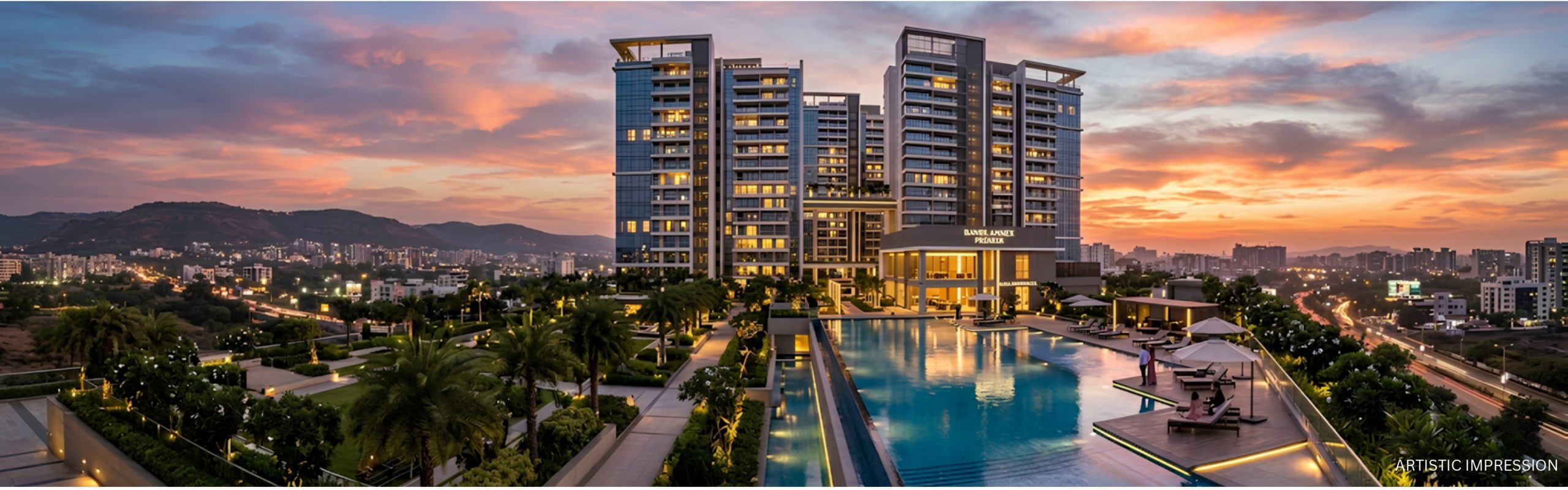
Projects like Raheja Vistas, for instance, reflect a different approach to planning—larger land parcels, close to 70% open space, and a layout that feels less compressed than what you’d typically find in older parts of Baner.
It’s not about standing out aggressively. It’s more about quietly aligning with what this area is slowly becoming.
Sources
This article draws from market insights published by Knight Frank India, ANAROCK Property Consultants, Maharashtra Government property registration data, and widely cited estimates related to Hinjawadi’s workforce and Pune’s residential growth trends.
FAQs
1. Where exactly is Baner Annex located?
Baner Annex is located right next to Baner in West Pune, with direct access to the Mumbai–Bangalore Highway and close connectivity to Hinjawadi, Wakad, and Aundh.
2. Is Baner Annex a good place to invest?
It’s still developing, which usually means better entry prices and potential for appreciation, especially given its proximity to major IT hubs.
3. How do property prices compare to Baner?
Prices in Baner Annex are currently lower than Baner, but the gap is gradually narrowing as demand increases.
4. What kind of homes are available here?
Most projects are modern residential developments with a focus on open spaces, amenities, and community living.
5. Who is typically buying homes in Baner Annex?
A mix of IT professionals, families, and investors looking for a balance between connectivity and a more spacious living environment.