


16 Jun What Makes a Residential Location Future-Ready for Modern Homebuyers?
A few years ago, buying a home was mostly about one thing, location.
And location usually meant how close you were to work, the railway station, or the city centre.
But homebuyers today think very differently.
People are no longer just buying apartments. They’re buying into a lifestyle. They want a neighbourhood that feels relevant not just today, but even 10 years from now. A place where daily life feels easier, healthier, smarter, and a little less exhausting.
That’s exactly why the idea of a “future-ready location” has become such an important part of modern real estate conversations.
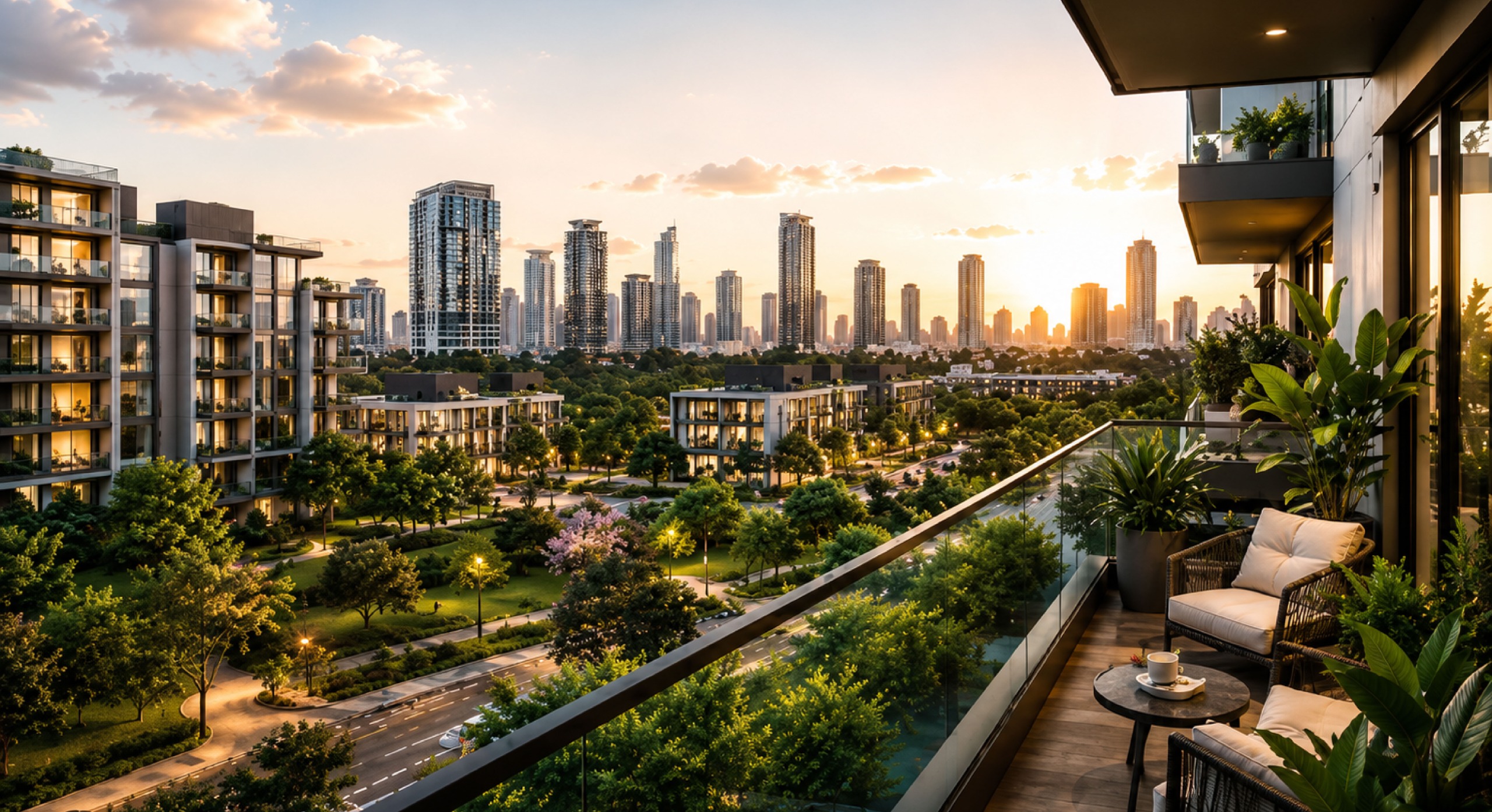
A future-ready residential location is not simply an area with new towers coming up. It’s a neighbourhood that can adapt to changing lifestyles, support long-term growth, and genuinely improve the experience of living there.
And honestly, buyers today are paying attention to details that earlier generations rarely considered.
People Want Less Chaos, Not Just Bigger Homes
One of the biggest shifts in homebuyer behaviour is this: people are tired of spending their lives commuting.
A luxurious apartment quickly loses its appeal when you spend hours stuck in traffic every single day.
That’s why future-ready locations are now being judged by how much they simplify life.
Buyers are looking for places that connect smoothly to workplaces, airports, schools, healthcare, and entertainment hubs — without making everyday movement feel stressful. Metro connectivity, better roads, mixed-use developments, and smarter city planning have started influencing buying decisions in a major way.
But interestingly, it’s not only about connectivity anymore.
It’s about convenience.
Can you step out for coffee without driving across the city?
Can your child reach school without a stressful commute?
Can weekends actually feel relaxing?
These small lifestyle questions are shaping modern real estate decisions more than ever before.
The “Everything Nearby” Lifestyle Is Becoming More Important
People today value accessibility differently.
There’s a growing preference for neighbourhoods where daily essentials are close by — supermarkets, clinics, cafés, fitness centres, parks, co-working spaces, and even leisure spots.
In many ways, buyers are trying to remove unnecessary friction from life.
That’s why self-sustained residential ecosystems are becoming increasingly attractive. Well-planned neighbourhoods and integrated developments perform better because they support a more balanced way of living.
Modern buyers want to spend less time travelling between places and more time actually enjoying life.
And after the pandemic, this shift became even more visible.
People realised how important neighbourhood quality really is when most of life started happening closer to home.
Work Culture Has Quietly Changed Housing Preferences
A few years ago, nobody really cared whether a home had a comfortable work corner or reliable internet infrastructure.
Now it matters.
Hybrid work and remote work have permanently changed the way people evaluate residential locations. Buyers are actively choosing areas where life feels calmer, less crowded, and easier to manage.
In fact, many professionals today are willing to move slightly away from traditional commercial zones if it gives them:
- Better air quality
- More open spaces
- Lower stress levels
- Larger homes
- Better work-life balance
This is why future-ready locations are not always the oldest or most expensive neighbourhoods in the city. Sometimes they’re emerging micro-markets being developed with a better understanding of how modern urban living actually works.
Buyers Are Thinking More About Mental Well-Being
This is something the real estate industry didn’t openly discuss earlier.
But today, wellness has become a genuine factor in homebuying.
People want neighbourhoods that feel breathable. Cleaner surroundings, quieter streets, open spaces, walking tracks, greenery, and lower-density communities are becoming increasingly desirable.
After years of aggressive urbanisation, buyers are beginning to value emotional comfort just as much as physical infrastructure.
A future-ready location is one where you don’t constantly feel drained by the city around you.
And honestly, that emotional quality matters more than most developers realise.
Sometimes, the difference between a good location and a great one is simply how it makes you feel at the end of the day.
Sustainability Is No Longer Just a Buzzword
Earlier, sustainability sounded like a fancy brochure term.
Now buyers genuinely care about it.
People are becoming more conscious about pollution, water shortages, energy consumption, and long-term environmental impact. As a result, residential locations with better green planning and sustainable infrastructure are gaining stronger attention.
Features like:
- EV charging infrastructure
- Rainwater harvesting
- Green open spaces
- Walkable layouts
- Energy-efficient buildings
- Better waste management systems
are increasingly becoming part of the decision-making process.
Especially for younger buyers, sustainability is closely linked to quality of life.
A future-ready neighbourhood isn’t just technologically advanced — it’s environmentally responsible too.
Infrastructure Still Matters — But Buyers Look Ahead Now
Another major change is that buyers are researching future growth instead of only current conditions.
Earlier, people would evaluate what already existed in a location.
Today, they’re studying proposed metro lines, upcoming business districts, planned roads, civic development projects, and infrastructure announcements before making a purchase decision.
Why?
Because people understand that infrastructure changes everything.
An overlooked area can completely transform in five years if the planning is strong enough.
That’s why future-ready locations often attract early investors and long-term buyers who understand urban growth patterns.
Homebuyers today are more informed and far more strategic than before.
Community Living Is Becoming More Valuable
Modern city life can sometimes feel isolating.
And interestingly, that’s making people appreciate community-driven environments more than ever.
Buyers increasingly prefer neighbourhoods that feel socially active and secure. Families want safe spaces for children. Elderly residents want walkable surroundings. Younger buyers want lifestyle amenities and social interaction without constantly stepping outside the neighbourhood.
A future-ready location supports all age groups comfortably.
That balance is becoming extremely important in modern urban planning.
Future-Ready Locations Offer Long-Term Investment Stability
A future-ready location is not only about lifestyle, it is also about investment resilience.
Neighbourhoods that adapt to changing urban behaviour tend to sustain property demand over longer periods. Buyers today are increasingly looking for locations that can retain relevance despite evolving market conditions.
This includes areas that can support:
- Changing demographic trends
- New mobility systems
- Technology integration
- Commercial expansion
- Sustainable urban growth
Locations that combine these factors are more likely to witness stable appreciation, stronger rental demand, and long-term desirability.
Conclusion
The definition of a great residential location has evolved far beyond prime pin codes or impressive amenities.
For modern homebuyers, future-readiness means adaptability, sustainability, mobility, wellness, digital integration, and long-term lifestyle value. Buyers are increasingly choosing neighbourhoods that can support not just current needs, but also future aspirations.
A future-ready residential location is ultimately one that makes everyday life smarter, healthier, more connected, and more balanced.
As cities continue to evolve rapidly, the neighbourhoods that successfully combine infrastructure, sustainability, lifestyle, and long-term vision will define the next generation of urban living.
FAQs
What makes a residential location good for long-term investment?
A strong long-term residential location usually has good infrastructure growth, future connectivity plans, social infrastructure, strong demand potential, and planned urban development. Areas that evolve with changing lifestyle trends often perform better over time.
Why are metro-connected residential locations becoming more popular?
Metro-connected locations reduce travel time and improve accessibility across the city. Homebuyers increasingly prefer these neighbourhoods because they make commuting faster, easier, and less stressful.
How important is sustainability while buying a home?
Sustainability has become a major factor for modern buyers. Features like green spaces, energy-efficient planning, water conservation systems, and eco-friendly infrastructure improve quality of life and can also support better long-term property value.
What should buyers check before selecting a residential location?
Homebuyers should evaluate connectivity, future infrastructure plans, safety, traffic conditions, schools, healthcare facilities, environmental quality, and overall lifestyle convenience before choosing a residential location.
Why are integrated townships becoming popular among homebuyers?
For 90% of buyers, Baner remains the preferred and safer investment choice, while Balewadi stands out for its expressway connectivity and emerging hotspot appeal.
Why is Baner famous in Pune?
Integrated townships offer a more self-sustained lifestyle by combining homes with retail spaces, recreation, schools, healthcare, and open areas within one ecosystem. This improves convenience and reduces dependence on long daily travel.